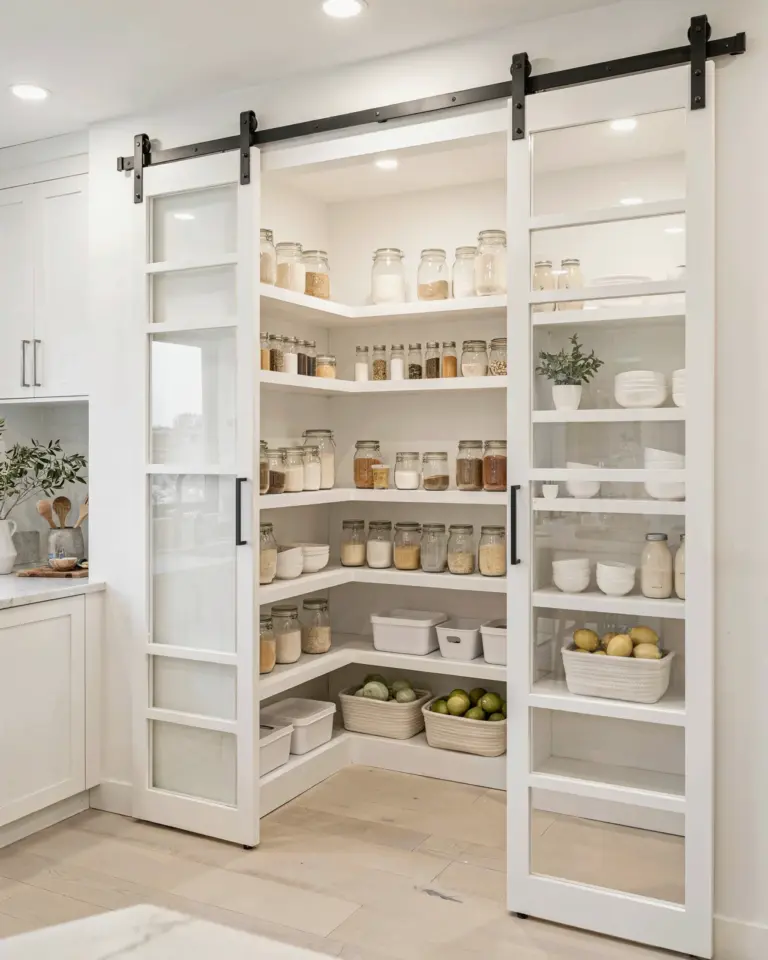
The tiny closet under my stairs used to be where kitchen appliances went to die. You know the scene: a sad waffle maker buried under a tower of mismatched Tupperware lids. But last month, I ripped out the wire shelving, patched the drywall, and turned that awkward void into a walk-in pantry that actually makes me happy. And honestly? It cost me less than a single trip to the big-box home store. If you’re dreaming about walk-in pantry ideas but you’re working with a shoestring budget, you’re in the right place.
Here’s the thing about a pantry: it isn’t about square footage or custom cabinetry. It’s about building a system that works for your actual life, not a magazine spread. Whether you have a full room or just a deep hall closet, you can fake that custom look with basic lumber, secondhand finds, and a little patience. Let’s get into the good stuff.
Maximize Vertical Space With Simple Wood Shelving
Forget measuring once and crying twice. Grab a stud finder, a level, and some standard pine boards. I used unfinished 2x10s and simple metal shelf brackets from the hardware store, and the whole setup cost around $80 for a 6-foot wall.
The trick is spacing. Don’t install all your shelves evenly, think about what you actually store. Put narrow shelves (8 inches deep) up top for rarely used platters. Go deeper with the middle shelves (12 to 14 inches) to fit cereal boxes and plastic storage containers. And leave the bottom shelf extra tall for that bulky slow cooker or a stack of cast iron skillets.
If you’re renting, skip the brackets entirely. Tension rod shelving units or even stacked milk crates can give you the same vertical look without putting a single hole in the wall. Not gonna lie, the crates look surprisingly chic if you spray paint them all the same color.
Mix Warm Wood Tones With Woven Baskets
Here’s where the cozy factor really comes in. Those cold, wire wire racks make everything look like a hospital supply closet. Swap them out for natural materials: rattan, seagrass, bamboo, even old canvas tote bags.
I picked up a set of thrifted woven baskets for $2 each at a yard sale. They’re not identical, and that’s exactly what makes the space feel curated instead of corporate. Use them for onions and potatoes on a low shelf, since those need airflow. Use another for bread, and another for those random snack bags that always roll to the back and get forgotten.
No need to buy a full matching basket set. Mixing textures is the whole point. If you want them to look intentional, just pick baskets that all fall within the same color family, warm browns and tans work beautifully against natural wood shelves.
Use Clear Jars for Dry Goods (But Skip the Perfect Labels)
Ok so I used to be obsessed with those perfectly labeled glass jars with the fancy chalkboard tags. Then I realized I was just organizing for Instagram instead of for my own sanity. The jars are great, the labels are overrated.
Here’s a practical system: buy a few large mason jars (or save pasta sauce jars, just soak the labels off). Pour in your flour, sugar, oats, and pasta. Do not stress about uniform sizing. The only thing that matters is that you can see what’s inside at a glance.
For labels, use painter’s tape and a sharpie. It looks fine. It’s functional. And when you switch from white rice to brown rice next month, you just peel and rewrite, no scraping off fancy adhesive. Nobody is opening your pantry door to judge your font choice. They’re opening it because they’re hungry.
Create a Budget-Friendly Coffee and Tea Station
Even in a pantry, you need a little corner of joy. If you have a spare shelf or a small cart, make a dedicated spot for the morning routine. I used a thrifted silver tray and an old wooden recipe box for tea bags.
Put the coffee maker (or electric kettle) on a sturdy lower shelf so it’s easy to reach. Use a pretty glass canister for coffee beans and a smaller one for sugar or honey. Hang a couple of cute mugs from small hooks underneath the shelf above.
The whole vibe shift is insane for like $15. It saves you counter space in the main kitchen, and it makes that first cup of coffee feel like a tiny ritual instead of a frantic scramble. Plus, having everything in one spot means you stop buying duplicates of ground coffee every time you go to the store.
Don’t Forget That Lighting Changes Everything
That single dangling bulb in the middle of the room? It’s gonna make even a nicely organized pantry feel like a basement. You don’t need an electrician. A simple plug-in LED strip with a remote control costs about $20 and you can stick it under a shelf.
Warm white light is the secret sauce here. It makes wood shelves glow and food look appetizing instead of stale. I also clipped a small battery-powered puck light to the inside of the doorframe so it turns on when I push the door open. Sounds fancy, it’s just a rechargable disc with a motion sensor.
Good lighting is the cheapest way to make a big space feel expensive. If your shelves are dark and shadowy, you won’t use the pantry. You’ll just shut the door and pretend the problem doesn’t exist.
Use Baskets and Bins for Problem Zones
We all have one shelf that turns into a black hole. Mine was the one designated for “snacks.” Family-size bags of chips getting crushed under a giant bag of pretzels. Every single week.
Here’s the fix: use a shallow, wide bin for each snack category. One bin for crackers, one for chips, one for sweets. When the bin is empty, you know it’s time to restock. Plus, it physically prevents you from overbuying because you know there’s only one bin’s worth of space.
For frozen stuff, use clear plastic bins in the chest freezer. For cleaning supplies, use a sturdy caddy with a handle. The slightly odd but hyper-specific trick? I keep a bin of lightbulbs and batteries in the pantry, right by the door, because that’s where I always end up looking for them anyway.
Make It Smell Amazing Without Buying a Diffuser
Cozy is a scent, too. And I don’t mean those aggressive plugin air fresheners that smell like a chemical factory. I put a small dish of whole coffee beans on one shelf, and I tuck a few dried lavender sprigs or a cinnamon stick bundle on another.
If your pantry tends to get musty, a small open box of baking soda on each shelf works wonders. Change it every few months. Honestly, this is the kind of detail that makes you want to just stand in the doorway and breathe in for a second.
Baking soda is literally cents. It’s not a design feature, but it is a quality-of-life feature. And when you have a cozy pantry that smells like coffee and cinnamon, you’ll find excuses to hover near that doorway all day long.
So yes, a warm and functional pantry is achievable, even if your budget is basically the contents of your couch cushions. Start with the wood shelves if you can swing it, then layer in the baskets and jars over time. This isn’t a one-weekend project unless you want it to be. It’s a slow, satisfying build.
Which idea are you going to try first? I’d love to know if you’re a basket fanatic or a glass jar devotee. Drop your thoughts in the comments, and happy organizing.
This post was researched and drafted with AI assistance, then personally reviewed and edited by Mia before publishing.
Leave a Comment