Opening your cabinet and actually finding the dinner plate you wanted, on the first try, feels like a small miracle. Most of us live with a chaotic tower of mismatched ceramics that shift and clatter every time we reach for a bowl. This is about fixing that specific, frustrating moment, especially when holiday season turns your kitchen into a high-stakes dinnerware depot. You want a system that survives the chaos of feeding a crowd, and honestly, it does not require a massive renovation or a custom-built pantry. It just requires a different way of looking at the space you already have.
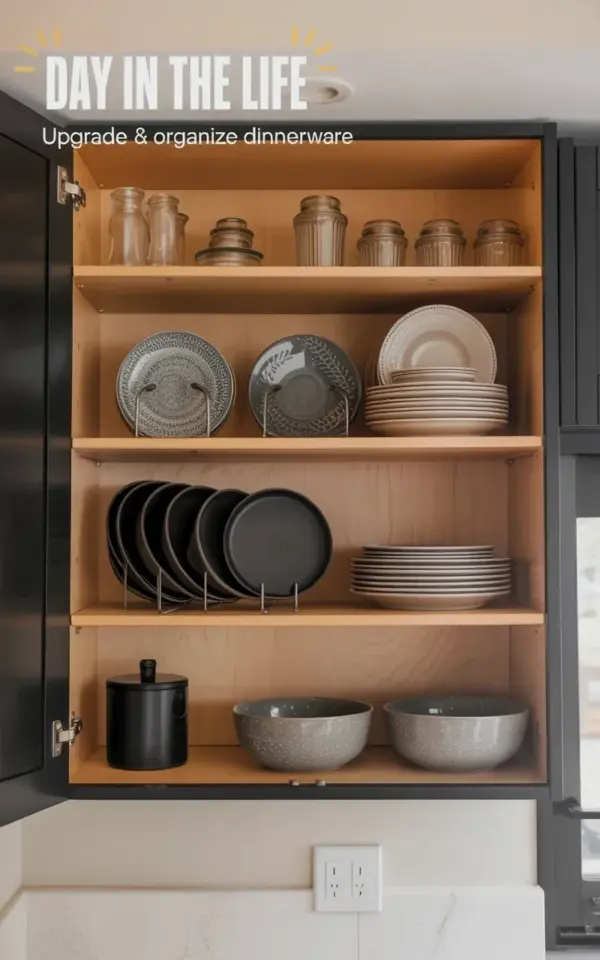
The photo that inspired this post shows a cabinet that makes complete sense. Wooden dividers and black hardware break the shelves into distinct zones, gray plates, white plates, and speckled bowls each have a designated spot. Clear glass jars up top hold the overflow, and those black lids sit flat instead of creating a wobbly pile. It is a beautiful, practical picture of what kitchen cabinet organization can look like when you plan around real life. The best part? Every single trick in that photo is something you can copy this weekend, without any prior experience or fancy tools.
Start With a Honest Cabinet Confession and a Clean Slate
Before you buy a single divider, take everything out of your cabinets. Yes, everything. I mean the dusty platter you used twice, the mismatched cereal bowls, and that mysterious lid collection that lives in the back corner. This is the messiest step in kitchen organization ideas, but you cannot organize clutter; you can only rearrange it. You need to see the actual volume of what you own before you can decide what deserves prime real estate.
As you pull things out, sort them into three piles: keep, donate, and relocate. Be brutally honest with the donate pile, because holiday dinnerware should not include chipped plates that could ruin a meal. If your everyday plates are cracked or your festive platter has a stress fracture, thank them for their service and let them go. You will also quickly realize that your cabinet has different micro-climates, the top shelf might be warm, the bottom shelf might be damp, and you must store your best ceramics accordingly.
Wipe down the empty shelves with a damp cloth and let them dry completely. This is the moment to notice if you have any pests, crumbs, or sticky residue hiding under the stacks. I found an old peppercorn and a mysterious sticky patch during my own purge, and let me tell you, cleaning it made the whole project feel new. Starting with a truly empty, clean cabinet is the only way the rest of this system will work.
Measure Your Shelves Before You Shop for Storage
Here is the thing about buying wooden dividers and containers: you will waste money if you guess the dimensions. Grab a measuring tape and write down the height, width, and depth of each shelf in inches. Do this now, because it is the difference between a system that fits perfectly and a collection of useless plastic pieces that you return in frustration.
Write down the height, width, and depth of each shelf in inches, and note the clearance below the shelf above. That vertical measurement will determine whether you can stack plates on edge or if you need to keep them flat. For small kitchen storage ideas, maximizing vertical space is your secret weapon, but you cannot do it without knowing your exact constraints.
I have made the mistake of buying beautiful acrylic risers that were just one inch too tall. It was infuriating. The risers looked lovely in the store and completely useless in my actual kitchen. Measure twice, buy once, and bring your shelf dimensions with you to the store or keep them open in a browser tab while you shop online.
Group Dinnerware by Function, Not by Color
Look, I love a color-coordinated cabinet as much as the next person, but function wins the battle for kitchen cabinet organization. Group your holiday dinnerware by how you actually use it during a meal. Your everyday white plates should be in the easiest-to-reach zone, at waist level or slightly below. Your fancy festive plates, the ones reserved for big dinners, can go on a higher shelf where they stay safe from daily grabbing.
In the photo example, the gray textured plates and white plates sit in neat rows, separated by a wooden divider. This is a great move because it gives each style a defined home without making you hunt through a stack. For your own cabinets, separate large dinner plates from salad plates and from bowls. If you have a specific set that only comes out for Thanksgiving, keep those pieces together as a unit, but store them higher up or further back.
Bulky serving pieces are the real challenge. A large platter should be stored vertically, leaning against the back of the cabinet with a divider holding it in place. It will take up less horizontal space and won’t crack under the weight of stacked bowls. Honestly, this simple change freed up a full third of my cabinet space, and I never went back to stacking platters flat.
Use Wooden Dividers and Risers to Create Vertical Zones
Wooden dividers are the unsung heroes of small kitchen storage ideas. They take a single deep shelf and turn it into three or four manageable sections, keeping your stacks from collapsing into one giant mess. Install them so they fit snugly between your plates, and they will hold even a wobbly pile of speckled bowls upright.
You can buy tension rod dividers, wooden shelf separators, or even use sturdy bookends in a pinch. The goal is to create a physical boundary that prevents your gray stoneware from sliding into your white ceramic stack. If your shelves are particularly deep, consider a riser in the back half so you can store two rows of items, a shallow stack in front and a taller set behind.
The photo shows black hardware, which adds a sleek, modern touch while keeping things durable. You do not have to match this exact aesthetic, but you should pick dividers that fit the cabinet and can handle the occasional bump. A divider that falls over every time you grab a bowl will quickly end up in a drawer, abandoned and unhelpful.
Stack Bowls Logically and Store Lids Flat
Bowls are the awkward middle child of the dinnerware family. They nest, but not always perfectly, and the sizes vary just enough to drive you crazy. Group your bowls by size, not by pattern, so you can actually achieve a neat stack. Put the large speckled serving bowls on the bottom and the smaller cereal bowls on top, and make sure the stack does not wobble.
Now, the lids in the photo deserve special attention because they are stored flat, not stacked. This is a critical tip for holiday dinnerware organization, because stacking lids vertically is a disaster waiting to happen. They slide, they scratch, and they inevitably fall out when you open the cabinet door. Store your lids flat in a single layer, or if you have many, use a vertical file organizer meant for baking sheets.
If you have a beloved Dutch oven or casserole dish with a heavy lid, give that lid its own dedicated spot. It might feel like a waste of space, but it is far better than the alternative, which is digging a lid out from a precarious pile while the matching pot dangles dangerously. Flat lid storage protects your cookware and your sanity.
Clear Glass Jars Are Your Best Friend for Bulk Items and Extras
The top shelf in that inspiration photo is holding clear glass jars and containers, which is such a smart use of high, hard-to-reach space. When you cannot easily access a shelf, you need see-through storage so you know what is up there without pulling a stool over. Glass jars are perfect for storing extra place settings, napkin rings, or even that random collection of spare lids that do not have a home.
Transfer your bulky or special-occasion items into these clear containers. You can see exactly how many extra salad plates you have, and the glass protects them from dust and grease. This works beautifully for small kitchen storage ideas because it consolidates the random bits into one neat, stackable block.
I keep a large glass jar on my top shelf holding my everyday black flatware, the kind that is too small for the main drawer. It looks intentional, it keeps the drawer from overflowing, and I can grab a handful whenever I need to set a quick table. It is a small change, but it removed a daily annoyance that I had been living with for years.
Maintain the System With a Quick Reset Routine
A beautiful cabinet system will not stay beautiful if you never touch it. You need a reset habit, especially after the holiday season ends. Spend five minutes at the end of the day, or the next morning, putting the dinnerware back in its designated zone. Do not let one stray plate be the beginning of a new messy pile.
When you bring out your holiday dinnerware for a party, put it back in the cabinet in the order you planned. Trust the system you built. If you find that you are constantly reaching for a certain plate, move it to a better location. Your cabinet should adapt to your habits, not the other way around, and it is okay to adjust a divider or swap a shelf.
The goal is a kitchen that works for you, where grabbing dinnerware for a family feast actually feels like a breeze. If your current setup makes you dread setting the table, take a weekend morning and try this. You will be shocked at how much of a difference a few wooden dividers and some honest decluttering can make.
So, take a look at your own cabinets with fresh eyes. What is one small storage trick you swear by, or what is the messiest spot you need to tackle first? Share your own tiny victory in the comments, it always makes the rest of us feel better about our own cluttered shelves.
This post was researched and drafted with AI assistance, then personally reviewed and edited by Mia before publishing.
Leave a Comment