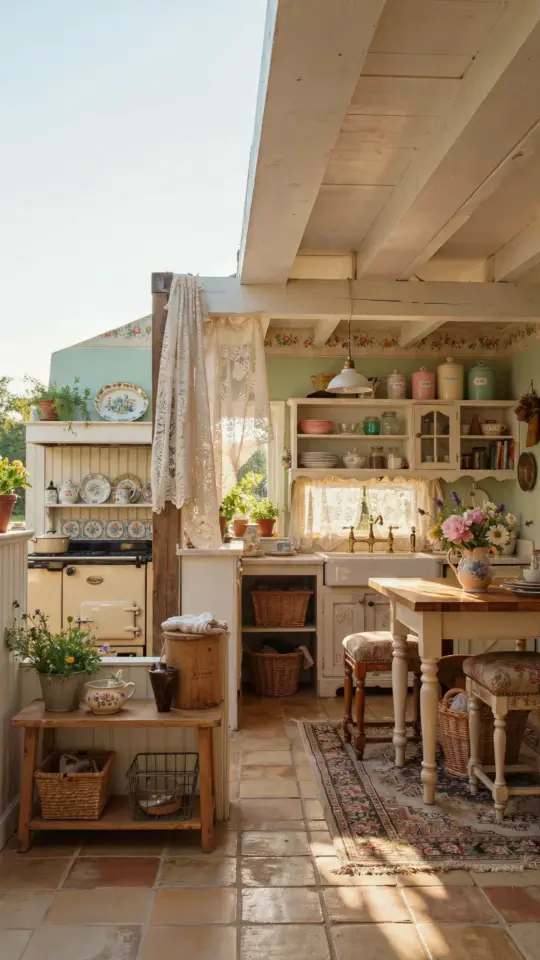
Living in a coastal town means I have sand in my car year-round and a grill that used to rust out every eighteen months. A coastal outdoor kitchen on a budget sounds like an oxymoron, doesn’t it? The ocean has a way of destroying everything it touches, but you can build something that survives without selling a kidney to do it.
Nobody wants to spend their weekend scraping corrosion off a cheap grill cart. I learned that the hard way, standing in my driveway with a wire brush and a lot of regret. But here’s the thing: you don’t have to spend $30,000 to get a kitchen that works, you just have to spend smart. Put your money where the salt air hits hardest, and fake it everywhere else. That’s the whole game, honestly.
Salt Air Design for Outdoor Kitchens: The Corrosion Reality Check
Look, salt air is not a gentle thing. It’s a fine, invisible mist that settles on every surface and starts eating it alive. Within a year, you’ll see pitting on cheap metal and bubbling on painted finishes. The stuff that touches this air has one job, which is to survive.
That means your main cooking appliance and your sink need to be high-grade stainless steel. Not the magnetic stuff, the real deal. You want 304-grade stainless, sometimes called marine grade. It costs more upfront, but it’s the difference between a kitchen that lasts ten years and one that turns into an orange mess after two summers. I’ve seen people buy budget grills to save $400, then replace them four times in a decade. The math doesn’t work.
The rest of the structure? That’s where you can get creative. You don’t need stainless steel cabinets to have a functional outdoor kitchen. You need stainless where the heat and water are, and waterproof materials for the body.
How to Build a Durable Outdoor Kitchen for Less: Splurge vs. Save
Ok so here’s where the budget plan comes together. You’re going to make a list and split it into two columns. Column one is “touches salt air directly.” Column two is “just needs to look good and hold stuff up.”
In the splurge column:
– The grill or cooktop (this is the heart, don’t cheap out)
– The sink and faucet (water plus salt air equals instant rust on cheap metal)
– Hardware, hinges, and drawer slides (these fail silently and drive you insane)
– Any exposed screws or fasteners, use stainless or coated ones
For the save column, you’ve got more freedom. Concrete block, stucco, tile, and brick all handle coastal conditions beautifully. And they’re cheap. A local masonry supply store will sell you concrete blocks for a few dollars each. Stack them, cover them with stucco or tile, and you have a permanent island base that laughs at the ocean.
You can also use regular pressure-treated lumber for the frame if you keep it protected and painted. I’m not gonna lie, this requires more upkeep, but it’s a fraction of the price. Use it for areas that will be shielded from direct spray.
Outdoor Kitchen Ideas for Coastal Homes: Layout Tricks That Save Money
Think about how you actually entertain. Most people don’t need a six-burner behemoth. Honestly, a simple 30-inch grill with a side burner covers almost every scenario. If you regularly feed a crowd, a basic modular unit from a big box store will do the job. You save thousands by skipping the built-in brand names and buying a freestanding grill that you then build around.
Here’s a practical tip: build your countertop with a cutout that fits a specific grill model. Measure it before you build anything. I made the mistake of guessing once, and the grill stuck out like a sore thumb. Total rookie move. When you frame the opening, leave a tiny gap for airflow so the heat doesn’t warp your surrounding material.
You also get major savings by using a simple wooden table as a prep area. Don’t build a massive counter, buy a used butcher block cart from a restaurant supply store. On wheels. It’s movable, it’s cheap, and if it rusts or rots, you just replace it. That’s the kind of flexibility that keeps a coastal outdoor kitchen budget from exploding.
Best Materials for Coastal Outdoor Kitchen Countertops: Porcelain Wins
Let’s talk surfaces, because this is where people overpay. Granite is pretty and all, but it needs regular sealing in coastal climates. Sealing is annoying. It takes time, it wears off, and if you miss a session, the stone can stain or the edges can degrade.
Porcelain slabs are the budget hero here. They’re dense, non-porous, and they don’t care about salt, sun, or spilled cocktails. You can get a large-format porcelain tile that looks just like marble or concrete for a fraction of the price. Use it on your countertop and your backsplash. It wipes clean, it doesn’t fade, and honestly, it’s the smartest material choice for a salt air design.
For the bar top, consider a sealed concrete overlay. It’s trendy, it’s cheap, and if it gets a little weathered, that just adds character. Some people pay thousands for a “custom concrete” look. You can DIY it with a cement mix and a trowel for under $100. Just coat it with a marine-grade sealer to keep the salt from staining it.
Coastal Outdoor Kitchen Ideas on a Budget: Cheap Wins and Upgrades
Alright, let’s get into the fun stuff that won’t break your wallet. These are the details that make people think you spent a fortune when you definitely didn’t. First, hit up a salvage yard for unique lighting. Old ship lanterns or marine-style sconces can be rewired cheaply. They handle the salty environment and look like they came right off a pier.
Second, use outdoor-grade cushions with Sunbrella fabric. They’re an investment, sure, but they survive the UV and the moisture. A cheap cushion from a department store will be faded and moldy by August. Buy once, cry once. It’s a cliche because it’s true.
Third, think about your storage. You don’t need high-end marine doors. Build simple cabinet fronts from teak or cedar that you let age naturally. The silver-gray patina is gorgeous and totally intentional. Plus, it requires zero maintenance. A few rope handles from a hardware store complete the coastal vibe. Everyone will ask where you got them. Say you made them. You basically did.
Things That Rust Out Instantly: A Public Service Announcement
I need to warn you about the sneaky stuff. The stuff you forget about until you open a drawer and find it covered in orange dust. Hinges are the main culprit. Cheap zinc hinges will fail within a season. Trust me on this. You’ll open a cabinet door and it’ll just fall off in your hand. It’s infuriating.
You also need to think about your appliances. A refrigerator under the counter is great, but the exposed coils need to be corrosion-resistant. Pull it out once a year and rinse the coils with fresh water to get rid of the salt buildup. It sounds weird, but it works. A five-minute rinse will double the life of your fridge.
And here’s something nobody talks about: your propane tank. The regulator and the valve connections are super sensitive to salt. Keep a plastic cover on the tank and spray the threads with a silicone lubricant a few times a year. Skip this and you’ll have a crusty, dangerous connection. Not worth the risk.
Even the screws on your outlet covers matter. Use the coated ones. You’ll be surprised how fast a standard metal outlet cover turns into a brown, crusty disaster. It’s a tiny change that saves you constant annoyance. I lost a favorite spatula to a deck board once, I don’t want you losing your mind over a rusty outlet.
How Much Does a Coastal Outdoor Kitchen Cost? Your Realistic Budget
So you want numbers, right? Fine. A modest, well-built coastal outdoor kitchen can be done for around $3,000 to $5,000 if you do some of the work yourself. That includes a decent grill, a great sink, a porcelain countertop, and a sturdy frame. The same setup from a professional contractor will run you $10,000 to $15,000. The difference is labor and markup, not magic.
You can go the DIY route and build the base from concrete blocks, then have a countertop fabricator cut and install a porcelain slab. That combo will save you thousands. You’ll spend weekends sweating and swearing, but you’ll save a lot of cash. That’s the trade-off for a durable outdoor kitchen on a budget. Either way, resist the urge to update to a fully stainless steel unit. Porcelain and concrete are your friends.
And a quick note on prep. Before you spend a single dollar, have a solid plan for your water and gas lines. Running gas lines requires a licensed pro. That’s non-negotiable. But you can have the pro come out later and tie into a stub that you already framed. That saves a visit and some money.
The ocean is going to do its thing. It will throw salt and wind and sun at your kitchen every single day. The best you can do is meet it with materials that don’t care. Spend heavy where the metal meets the sea, and keep your budget light where you can, then get out there and cook something good.
If this guide saved you from buying a cheap grill that would rust out next year, or helped you plan your build, do me a favor and save this post. You’ll need it when you’re at the hardware store staring at a wall of hinges trying to remember what stainless steel looks like. I’ve been there. You’ve got this.
This post was researched and drafted with AI assistance, then personally reviewed and edited by Mia before publishing.
Leave a Comment