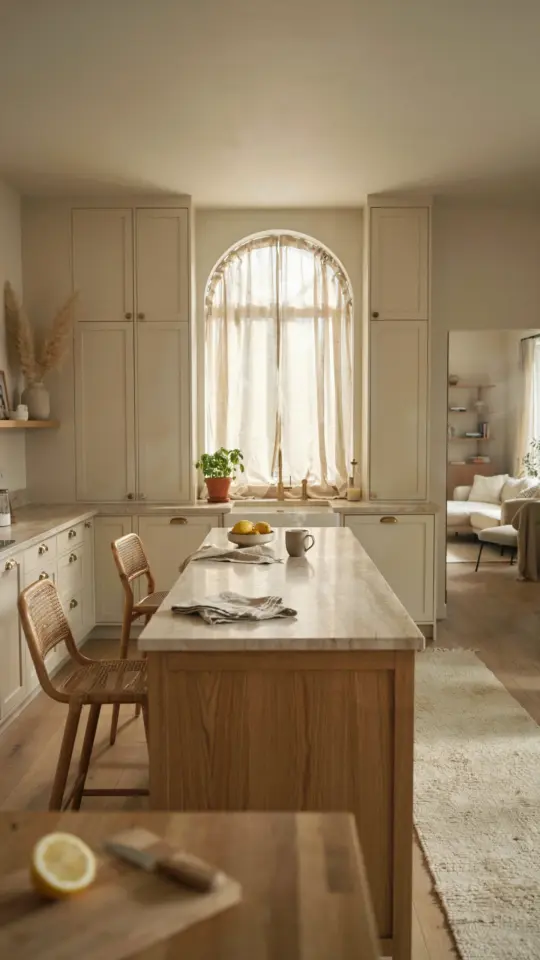
Why the Open Concept Look Sometimes Falls Flat
When I first walked into a Toll Brothers model home in Orlando, I understood why so many people pin that openconceptlivingroom and kitchen combo. The neutral palette felt calm, and the modern organic touches made everything look effortless. But here is the truth: most homeowners make the same few mistakes when they try to recreate this look at home. I have seen it happen again and again. The good news is that those mistakes are easy to fix once you know what to watch for. Let me walk you through the most common pitfalls and how to avoid them so your own space feels just as inviting as that Toll Brothers showroom.
Mistake #1: Choosing a Neutral Palette That Feels Lifeless
Many people think a neutral palette means white walls, beige furniture, and nothing else. The result is a room that looks flat and unfinished, like a waiting room. A true neutral palette for a modern organic space needs layers of undertones: warm greiges, soft taupe, creamy off-whites, and even hints of muted sage or clay. The Toll Brothers designers in Orlando use these variations to keep the eye moving. Without them, the room feels cold.
To avoid this mistake, bring in at least three different neutral shades. For example, paint the walls a warm white with a yellow undertone, choose a sofa in a light greige, and add linen drapes in a deeper oatmeal. Then insert small organic accents like a jute rug or a wooden coffee table. The contrast in texture and tone prevents flatness. I always tell clients: if your neutral palette looks boring in the paint store, it will look boring in your living room.
Mistake #2: Forgetting the Flow Between Kitchen and Living Room
An open concept layout only works if the kitchen and living room feel like one cohesive space. A common error is treating them as separate zones with completely different flooring, countertop materials, or color schemes. I once toured a home where the kitchen had white quartz counters and gray cabinets, while the living room used warm brown leather and a beige rug. The two halves clashed. Toll Brothers avoids this by repeating the same wood tones and neutral finishes throughout the entire openconceptkitchenlivingroom area.
Here is a simple checklist to unify the two zones:
- Use the same flooring material (or at least compatible tones) across both areas.
- Repeat the cabinet hardware finish on living room light fixtures or furniture legs.
- Carry the same neutral wall color through both spaces without a trim break.
- Choose a kitchen island countertop that echoes the living room’s side tables or mantel material.
When you follow these rules, the eye travels smoothly from the sofa to the stove without any jarring transitions.
Mistake #3: Overdoing Modern Organic Accents
The modern organic style relies on natural materials, curved shapes, and earthy textures. But it is easy to go too far. I have seen rooms stuffed with macramé wall hangings, three different kinds of wooden bowls, and a dozen rattan baskets. That is not modern organic. That is a craft store explosion. The key is restraint. In the Toll Brothers Orlando model, a single large leather armchair, one sculptural ceramic vase, and a linen sofa do all the work. The rest of the space stays clean.
To keep your modern organic accents in check, pick three natural materials at most: wood, stone, and linen for example. Then limit decorative objects to two or three per zone. A driftwood sculpture on the coffee table and a woven pendant light above the island is plenty. Let the negative space breathe. The organic look comes from the materials themselves, not from cramming them into every corner.
Mistake #4: Ignoring Lighting Zones in an Open Layout
An open concept space with only one overhead light source is a disaster. The kitchen might be well lit while the living room corner is a cave. Toll Brothers plans for layered lighting: task lights over the island, ambient pendants in the living area, and natural light from large windows. Too many homeowners rely on the builder’s standard flush-mount lights, which cast harsh shadows and make the neutral palette look drab.
Start by identifying three types of light: ambient, task
#OpenConceptLivingRoom #NeutralPalette #ModernOrganic #TollBrothers #DreamKitchenDesign
This post was researched and drafted with AI assistance, then personally reviewed and edited by Mia before publishing.
Leave a Comment