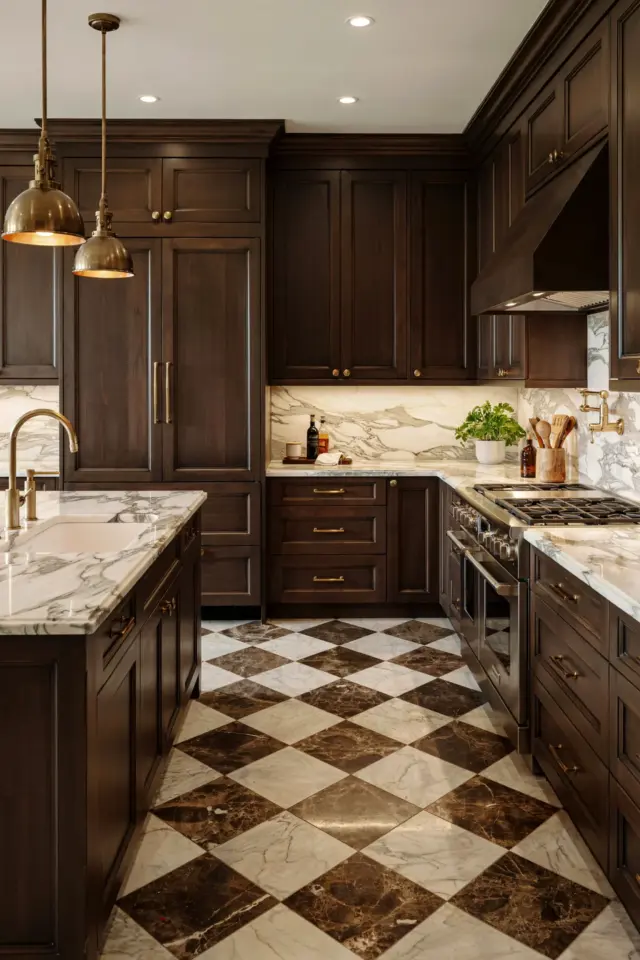
There is something about a moody walnut kitchen design that feels both timeless and right now. After years of all white everything, homeowners are finally embracing dark wood cabinetry with real grain and warmth. I have been watching this shift closely, and the combination of rich walnut, cool marble, brass hardware, and a checkerboard floor is becoming the go to palette for anyone who wants a kitchen with personality. It is not just a look for historic homes either. This style works in newer spaces too, as long as you pay attention to balance and light.
Why Walnut Cabinetry Works for a Moody Kitchen Palette
Walnut is not a neutral wood in the way oak or maple can be. It has a natural darkness, with brown undertones that can lean toward chocolate or even a warm violet hue depending on the finish. That depth is what makes it perfect for a moody kitchen. It absorbs light rather than bouncing it around, which creates a cozy, enveloping feel. But here is the thing you need to know: walnut can easily feel heavy if you use it everywhere. I recommend limiting full walnut cabinetry to the base cabinets and lower sections, then using a lighter material like painted wood or open shelving above. This keeps the room from turning into a cave.
The other advantage of walnut is its grain pattern. Unlike painted cabinets that hide imperfection, walnut shows every swirl and knot. That natural variation adds character that changes in different light throughout the day. In the morning, it reads almost golden. By evening, it becomes a deep, serious brown. That shift is part of the appeal.
Pairing Marble Backsplash with Dark Wood for Contrast
Marble backsplash is the obvious partner to dark walnut, but not all marble works the same way. Veined Carrara or Statuario marble with high contrast white and grey lines gives you the crisp visual break that dark cabinetry needs. If you pick a marble that is too dark or busy, the whole kitchen blends into a brown and grey blur. You want that marble to pop. I have seen kitchens where the backsplash runs all the way up to the ceiling, and that vertical stripe of light stone softens the weight of the walnut below.
One practical warning: marble is porous and etches easily from acidic foods like lemon or tomato sauce. If you cook a lot, consider using the marble as a backsplash only and choosing a different material for the countertops. But if you are willing to live with the patina, marble backsplash with walnut cabinetry creates a look that feels collected rather than brand new. The slight wear over time adds to the moody, lived in vibe.
Checkerboard Floor Options That Hold Up to Daily Life
A checkerboard floor is the boldest element in this design, and it is also the one that gets the most foot traffic. Black and white tile is the classic choice, but for a moody walnut kitchen, I actually prefer a slightly softer take. Think charcoal and off white instead of pure black and stark white. That shift keeps the floor from competing too hard with the dark cabinets. Another option that I have been seeing more often is a checkerboard pattern in marble or limestone. These natural stones age gracefully and feel more grounded than glossy ceramic.
Here are a few floor materials that work well with walnut cabinetry:
- Encaustic cement tile – durable, slightly matte, and available in custom colorways that pick up the warm brown of the walnut.
- Porcelain checkerboard – easy to clean, won’t stain, and you can find options that mimic natural stone without the upkeep.
- Vinyl checkerboard sheet – not glamorous but surprisingly good for rental kitchens or tight budgets. Modern vinyl has better color depth than you expect.
- Real marble checkers – expensive and requires sealing, but if you want the genuine antique look, nothing else compares.
Whichever you choose, make sure the tiles are square and aligned properly. A crooked checkerboard floor in a moody kitchen is one of those details that drives me crazy because everything else is so intentional.
Brass Accents That Warm Up a Dark Kitchen
Brass is the finishing touch that separates a flat brown kitchen from a rich, layered one. The trick is to use unlacquered brass if you are okay with it darkening over time, or a polished brass with a clear coat if you want it to stay bright. I lean toward unlacquered because the patina that develops adds to the moody, antique feeling. Think brass cabinet pulls, a gooseneck faucet, and perhaps a brass pot filler above the stove.
But you do not need to go overboard. Three or four brass fixtures in the kitchen are enough. Too much brass starts to look like a Restoration Hardware catalog. Instead, let the walnut and marble do most of the talking, and use brass as an accent that catches the light. A brass pendant lamp over the island or a brass towel ring near the sink can be enough to tie the whole room together.
Balancing Antique Charm with Modern Functionality
This is the part where many people get stuck. A moody walnut kitchen with marble and checkerboard sounds gorgeous in photos, but does it work for a family that cooks every day? The answer is yes, if you make a few
This post was researched and drafted with AI assistance, then personally reviewed and edited by Mia before publishing.
Leave a Comment