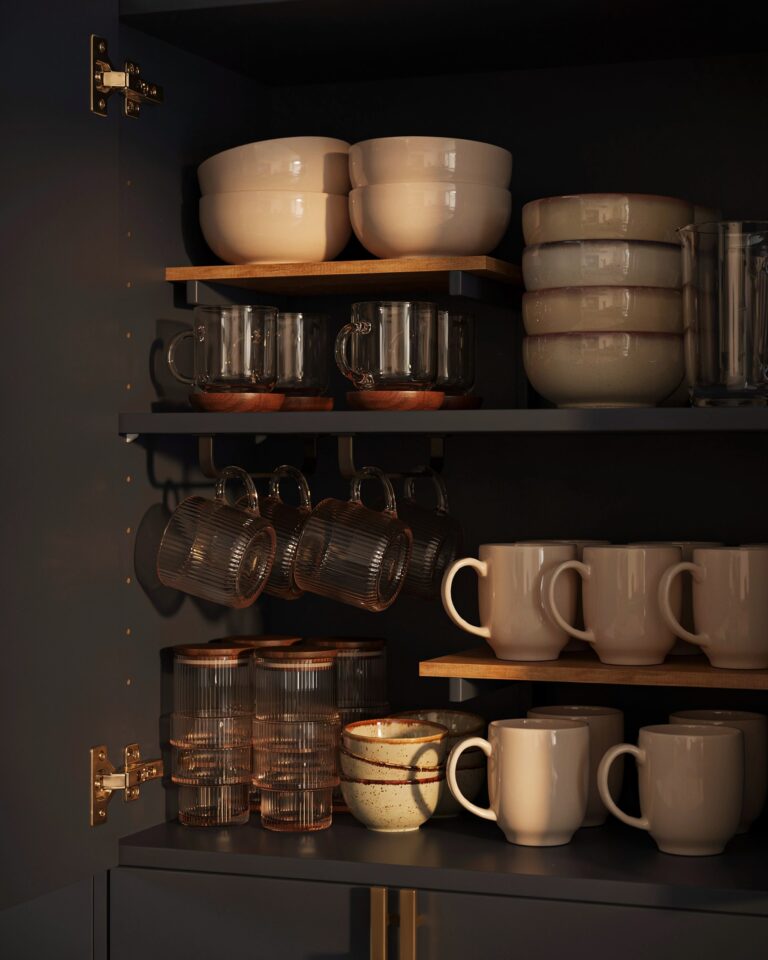
I used to open my kitchen cupboards and feel a small wave of dread. Mugs wobbled, lids clattered, and plates stacked in perilous towers. Then I finally tackled the mess head on. What I learned about kitchen cupboard organization changed my mornings from frantic to calm. These satisfyingly organized cupboards are now my favorite part of the house. Let me show you what actually worked for me, not the picture perfect version you see on social media, but the real world system that keeps everything in place.
Starting with a total cupboard clear out
Before you buy a single bin or shelf riser, you have to empty every single cupboard. I pulled everything out onto the counter and dining table. It was overwhelming but necessary. I sorted items into three piles: keep, donate, and trash. Be honest with yourself. That dusty bread maker you used twice in 2018? Let it go.
I also threw away mismatched lids, chipped mugs, and plastic containers without tops. This step alone freed up about thirty percent of my cupboard space. Decluttering is the foundation of how to declutter kitchen cupboards without buying extra storage you do not need. Less stuff means less to organize.
Grouping items by use and frequency
Once I had only what I actually used, I grouped things by how often I reach for them. Everyday dishes and glasses go in the most accessible cupboards, usually above the dishwasher or sink. Less used items like seasonal bakeware and large serving platters live on higher shelves or in harder to reach corners.
I also kept a zone system in mind. Coffee and tea supplies live together. Baking ingredients, measuring cups, and mixing bowls are all in one cupboard. This grouping is one of the best kitchen cupboard storage solutions because it reduces hunting. You know exactly where to look.
The magic of adjustable shelves and shelf risers
My cupboards had fixed shelves that wasted vertical space. Stacking plates on top of each other meant I could only fit a few. I bought simple wire shelf risers, the kind that add a second tier inside the cupboard. Suddenly, I could store small bowls on the riser and taller cereal containers underneath.
For cupboards with adjustable shelves, I moved them to accommodate different items. A tall shelf for oil bottles and vinegar. A shorter shelf for small ramekins and spice jars. This kind of maximizing cupboard space costs almost nothing but changes everything. I even used a tension rod under the sink to hang spray bottles. Total game changer.
Using clear bins and labels
I resisted bins for a long time because they felt like extra stuff. But clear bins changed my mind. I use them for snack packets, tea bags, and small condiment packets that would otherwise slide around. When you can see everything at a glance, you do not forget what you have. This is the core of clear bin organization for cupboards.
- Group like items in a single bin (all tea bags together, all granola bars together).
- Use square or rectangular bins to maximize shelf space, not round ones.
- Label the front of each bin with a simple chalk label or label maker. It helps everyone in the family put things back correctly.
- Leave a little breathing room inside the bin so you can easily grab items without dumping everything out.
Labels are not just for looks. They are a reminder for myself and my husband to return things to their home. No more hunting for the box of pasta that drifted behind the canned tomatoes.
Organizing mugs and plates
Mugs used to be my arch nemesis. They never stacked well and always fell over. I found that storing them in a single row on a low shelf, with handles facing the same direction, keeps them stable. I use a small mug tree for my favorite oversized mugs that do not fit on the shelf.
For plates, I stopped stacking more than six deep. It sounds like a waste of space, but tall stacks are unstable and make you pull out five plates to reach the one at the bottom. I store dinner plates on one side of the shelf and smaller salad plates on the other. This method is my favorite for organizing mugs and plates in cupboards. It is simple, practical, and never collapses.
Maintaining the system without losing your mind
Organization is not a one time task. I spent three weekends getting my cupboards perfect, and then within two weeks they started to slide back to chaos. I realized I needed a maintenance routine. Now I spend five minutes each evening before bed resetting the cupboards. I return stray mugs to their shelf and straighten the bin of snack bags.
I also do a quick quarterly review. I pull out anything that has not been used in three months and either donate it or find a better home. This habit is the secret to keeping kitchen cupboards organized long term. You do not need to be perfect every day. Just a little reset goes a long way.
Another trick that worked for me: I take a photo of each organized cupboard and keep it on my phone. When I am tired or in a rush, I can
#cupboardorganization #homeorganization #kitchenorganization #kitchencupboards #organizedhome
This post was researched and drafted with AI assistance, then personally reviewed and edited by Mia before publishing.
Leave a Comment